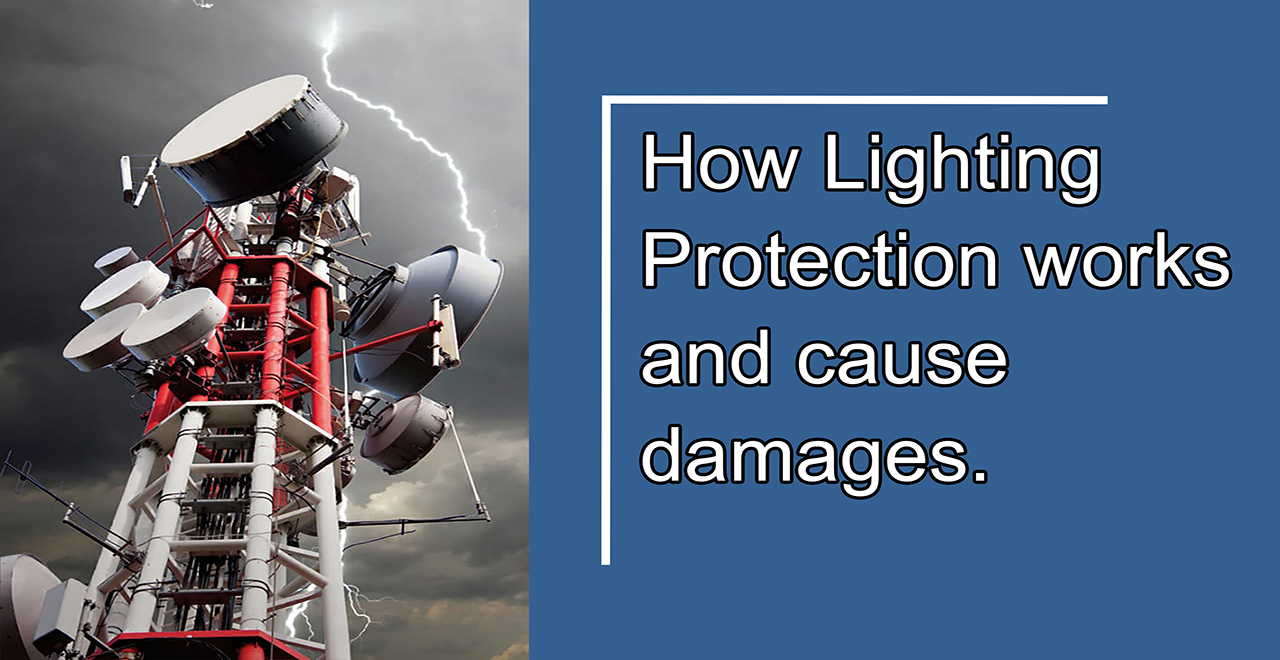
How Lighting Protection works and cause damages.
Lightning discharges occurring to earth can present hazards to structures and lines which could produce damage
to the structure and its contents, cause the failure of electric and electronic systems and result in
injury to living beings in or around the structure.
These consequences can be extended to involve the structure’s surroundings and environment.
A Risk Assessment can be conducted to determine the extent of the possibilities of this kind of damage,
and which lightning protection measures would be suitable for the particular structure.
The risk is defined in the SANS 62305-2 as the possible average annual loss which is determined by the
following:
- The yearly number of lightning flashes influencing the structure directly as well as the area near the structure.
- The incoming lines, the probability of these flashes causing damage, and the mean amount of consequential loss.
A lightning flash may cause damage depending on the characteristics of the structure to be protected.
Some of the most important characteristics are:
- Type of construction
- Contents and application
- Type of service and protection measures provided.
- D1 – Injury to living beings by electric shock.
- D2 – Physical damage.
- D3 – Failure of electrical and electronic